
What Is Evidence-Based Practice in Healthcare?
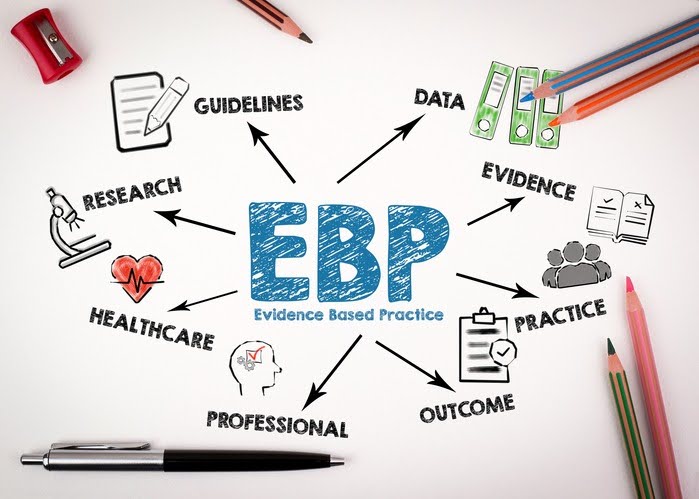
Evidence-based practice, or EBP, is an approach to healthcare decision-making that combines the best available research evidence, clinical expertise and professional judgment, and a patient’s values, needs, and preferences. Nurses and other healthcare professionals use it to base patient care decisions on reliable evidence rather than tradition, habit, or personal opinion.
The American Nurses Association describes evidence-based nursing as care that draws on current research and professional knowledge instead of relying only on how things have always been done. For nurses, understanding EBP can support stronger clinical reasoning, quality improvement, and informed decision-making.
How the Three Elements Work Together
EBP does not mean nurses follow every new study without question. Research has to be reviewed carefully to determine whether it is credible, relevant, and appropriate for a specific patient or care setting.
In practice, EBP helps healthcare professionals ask a simple but important question: what does the best available evidence suggest, and how does it fit this patient’s needs? Answering that well means weighing the evidence against clinical judgment and the patient’s own preferences, not treating any single factor as the final word.
Why Evidence-Based Practice Matters in Nursing
Healthcare practices continue to change as new research becomes available. Evidence-based practice helps nurses and other professionals evaluate that information and decide whether it should influence patient care.
It Supports Informed Clinical Decisions
Nurses often face situations where more than one care option is possible. Evidence-based practice offers a process for reviewing available research before choosing an approach. Clinical experience still matters, but it gets weighed alongside the evidence and the patient’s situation, and the result tends to be decisions that are more thoughtful and consistent.
It Can Support Quality and Patient Safety
Evidence can help care teams identify practices that support safer, more effective care. Research may inform decisions related to infection prevention, patient education, fall prevention, symptom management, medication practices, or communication. It can also help organizations review whether current procedures still hold up against the best available information.
It Helps Nurses Stay Current
A once-common practice may change as stronger evidence becomes available. EBP encourages nurses to keep learning throughout their careers. Instead of relying only on how something has always been done, they can review current research and consider whether practice should change.
It Keeps the Patient Part of the Decision
Evidence-based care is not built on research alone. A patient’s goals, values, culture, and individual circumstances matter too. An approach backed by strong research may still need adjusting to fit a specific patient. That is why EBP treats clinical judgment and patient input as equal partners to the evidence itself.
Because nurses are closely involved in patient care, education, monitoring, and coordination, they are often the first to spot a question worth a closer look, whether it touches patient safety, symptom management, workflow, communication, or population health.
What Are the 5 Steps of Evidence-Based Practice?
Evidence-based practice is often organized into a series of steps that move a clinical question toward an informed decision. A common five-step process includes asking a focused question, finding evidence, evaluating the evidence, applying it, and reviewing the results.
1. Ask a Focused Clinical Question
The process begins with a clear question about patient care or clinical practice. A nursing team, for example, may want to know whether a different patient education method could improve understanding of discharge instructions. A focused question narrows the search for useful evidence.
2. Search for Relevant Evidence
Next, healthcare professionals look for credible information related to the question. Sources may include:
- Peer-reviewed research studies
- Systematic reviews
- Clinical practice guidelines
- Professional healthcare publications
- Research databases
The goal is to find evidence that is current, trustworthy, and relevant to the clinical issue.
3. Evaluate the Evidence
Not all research is equally strong. Nurses need to examine how a study was designed, how the data was collected, how large the study was, and whether the findings apply to the patient population or care setting. This process is often called critical appraisal. The goal is not simply to find research. It is to determine whether that research is strong enough to guide practice.
4. Apply the Evidence to Patient Care
After reviewing the evidence, the care team considers whether and how it should be used. That decision may take into account clinical judgment, patient preferences, organizational policies, available resources, and the needs of the care setting. Changes may involve collaboration with nurses, physicians, administrators, or other members of the healthcare team.
5. Evaluate the Results
The process continues after a new approach is introduced. Healthcare professionals may review patient outcomes, safety measures, staff feedback, or other results to see whether the change was useful. If the outcome falls short, the team may revise the approach or start the process again with a new question.
What Is an Example of Evidence-Based Practice in Healthcare?
Evidence-based practice shows up in many areas of healthcare. Consider a nursing team that notices some patients are having trouble understanding discharge instructions. Instead of changing the process based only on staff opinion, the team could review research on patient education methods, examining evidence related to teach-back techniques, written instructions, language access, or digital learning tools.
The team would then compare the research with the needs of its patient population and care setting. If a new approach is introduced, the team could track whether patient understanding improves. This example shows how EBP works in practice: the decision is guided by evidence, professional judgment, and patient needs.
Evidence-Based Practice vs. Research
Evidence-based practice and healthcare research are closely connected, but they are not the same. Research is used to create or test new knowledge. Researchers may study a treatment, intervention, healthcare process, or patient population to answer a specific question.
Evidence-based practice uses research findings and other reliable evidence to guide clinical decisions. A nurse does not need to conduct a new study every time a clinical question comes up. Instead, nurses learn how to find existing research, evaluate its strength, and decide whether it applies to their practice. In simple terms, research builds knowledge. Evidence-based practice puts that knowledge to work in patient care.
What Skills Support Evidence-Based Practice?
Evidence-based practice takes more than finding an article online. Nurses need several skills to evaluate evidence and apply it responsibly.
Critical Thinking
Healthcare professionals must compare evidence, recognize its limits, and decide whether findings apply to a specific situation. Critical thinking helps them avoid accepting information at face value.
Research Literacy
Research literacy means understanding how studies are designed, reported, and evaluated. This may include recognizing different types of research, understanding basic statistics, and deciding whether conclusions are supported by the findings.
Clinical Judgment
No study can account for every patient or clinical situation. Professional experience helps nurses weigh how evidence fits with a patient’s condition, history, preferences, and care needs.
Communication and Collaboration
Changes in care often involve more than one healthcare professional. Nurses may need to explain findings, discuss options with colleagues, communicate with patients and families, or take part in quality improvement efforts.
Quality Improvement
Evidence may point to a promising care practice, while quality improvement methods help teams measure how well that practice actually works in their organization or patient population.
How RN-to-BSN Education at MDC Online Can Build These Skills
BSN-level nursing education can expand a registered nurse’s understanding of research, evidence-based practice, leadership, quality, safety, and population health. MDC Online’s RN-to-BSN program builds on that foundation, covering evidence-based practice alongside cultural competency, population-specific health outcomes, quality and safety, and healthcare information technology. It’s delivered in an asynchronous online format with full-time and part-time track options, and two clinical courses include in-person components.
Evidence-based practice follows the same pattern nurses see throughout this kind of coursework: start with a question, weigh the evidence, and apply it with the patient in mind. That approach supports stronger critical thinking, better quality improvement work, and care that stays centered on the patient.
