
RN to BSN Curriculum: What Classes Will You Take?

RN to BSN students study subjects such as nursing leadership, research, community health, patient safety, communication, and healthcare technology. These courses build on the clinical education and experience registered nurses already have.
Instead of repeating basic nursing skills, the curriculum helps students examine how research, policies, technology, and healthcare systems affect patient care. Students also learn how nurses can guide teams, assess community needs, and take part in quality improvement efforts.
Understanding the curriculum can help registered nurses decide whether an RN to BSN program is the right fit for their goals. The sections below explain what students may study, what online coursework can involve, and how working nurses can prepare for their classes.
How RN to BSN Classes Build on Nursing Experience
RN to BSN programs are designed for registered nurses who have already completed prior nursing education. Students enter the program with knowledge of bedside care, clinical procedures, patient assessment, and professional nursing responsibilities.
Bachelor’s-level coursework places that experience in a wider context. Rather than focusing on how to perform basic bedside tasks, students spend more time examining why care processes work, how healthcare systems affect outcomes, and how nurses can contribute to improvements beyond individual patient encounters.
For example, a nurse who has seen repeated patient falls may examine how research, staffing, documentation, and unit procedures contribute to the problem. The student can then consider changes that may help reduce risk.
This approach helps nurses connect daily patient care with larger issues such as leadership, public health, healthcare policy, quality measurement, and organizational decision-making.
At MDC Online, the RN to BSN program expands on the Associate of Science in Nursing curriculum. Its academic focus includes evidence-based practice, cultural competency, population health, quality and safety, information technology, and nurse leadership.
What Classes Are Included in an RN to BSN Curriculum?
Course titles and requirements vary by college, but RN to BSN curricula often cover several core areas of professional nursing practice.
MDC’s official course sequence includes subjects such as nursing research, community health nursing, leadership and management, health assessment, pathophysiology, pharmacology, culture and global health, and advanced nursing practice. The sequence also includes two practicum courses.
Each subject helps students examine a different part of professional nursing practice.
Leadership and Management Classes in an RN to BSN Program
Leadership classes focus on how nurses guide care, communicate with teams, and respond to workplace challenges. Students may examine delegation, accountability, conflict resolution, ethical decisions, and organizational change.
A leadership assignment might ask a student to analyze a communication problem during a shift change. Instead of blaming one person, the student may review the handoff process, staff roles, available technology, and unit expectations.
These courses are relevant even for nurses who do not plan to become managers. Registered nurses often coordinate care, support coworkers, explain decisions, and respond when plans change.
They may also lead patient handoffs, mentor newer nurses, participate in unit committees, or help coordinate care across departments. Leadership coursework helps students strengthen teamwork, communication, and accountability skills.
MDC’s RN to BSN sequence includes a course in leadership and management theory. The program page also identifies leadership and management as one of its main academic and professional focus areas.
Evidence-Based Practice and Nursing Research
Evidence-based practice combines research findings, clinical knowledge, and patient preferences. RN to BSN students learn how to review information before deciding whether it should influence patient care.
Students may practice how to:
- Develop a focused clinical question.
- Find credible nursing research.
- Review how a study was conducted.
- Compare findings from several sources.
- Identify limits or gaps in the evidence.
- Connect research to a clinical concern.
For example, a student might review studies about infection prevention, medication errors, pressure injuries, or hospital readmissions. The assignment may ask whether the findings apply to a particular patient group or healthcare setting.
MDC’s course sequence includes nursing research, and the program identifies evidence-based practice as a central part of the curriculum.
Learning how to evaluate research can help nurses make informed decisions instead of relying only on routine practice or past experience.
Community and Public Health Nursing
Community health courses look at the needs of populations rather than focusing only on one patient. Students examine how living conditions, education, income, culture, transportation, and access to care may affect health.
Coursework may involve reviewing local health data, identifying a concern within a community, and developing an education or prevention plan. A student might study diabetes rates in a neighborhood, barriers to prenatal care, hurricane preparedness for older adults, or access to vaccinations.
This subject helps nurses understand why two patients with similar diagnoses may face very different challenges outside a clinical setting.
Even nurses who work in hospitals benefit from understanding the social and environmental factors that may affect a patient’s health after discharge.
MDC’s curriculum includes Community Health Nursing and a related practicum. Students should review the current course sequence for details about practicum requirements.
Healthcare Technology and Nursing Informatics
Nursing informatics examines how digital tools and health information support patient care. It may include electronic health records, clinical data, decision-support tools, privacy, and information security.
Students may examine how digital records and healthcare data affect documentation, communication, care coordination, and quality improvement.
Students may explore questions such as:
- How can incomplete documentation affect a patient’s care?
- What information should be shared during a transfer?
- How can data reveal a pattern in falls or infections?
- What privacy risks can occur when using digital systems?
These courses do not train nurses to become software specialists. They help students understand how accurate information, secure systems, and careful documentation support communication and patient safety.
MDC’s RN to BSN program identifies information technology as an area of academic focus. Specific technology-related assignments and topics may vary by course.
Communication and Patient-Centered Care
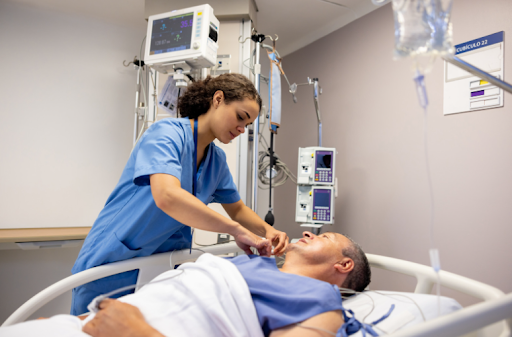
Communication courses and assignments help nurses work effectively with patients, families, and healthcare professionals. Students may study health literacy, patient education, cultural awareness, advocacy, and interprofessional communication.
Consider a patient who is preparing to leave the hospital with several new medications. The nurse must explain the instructions clearly, check the patient’s understanding, address concerns, and communicate with other members of the care team.
Patient-centered care also requires nurses to consider a person’s values, goals, language needs, and living situation. Clear communication helps patients take part in decisions about their care.
Students may examine how communication should be adjusted based on a patient’s health literacy, cultural background, language needs, age, or care setting.
MDC’s curriculum emphasizes cultural competency, equitable care, and inclusive population-specific health outcomes.
Quality, Safety, and Healthcare Systems
Quality and safety coursework teaches students to examine why errors and gaps in care occur. The focus is often on systems, not only individual actions.
A student reviewing a medication error may consider several factors:
- Was the order entered correctly?
- Did the electronic record display the information clearly?
- Were staffing levels appropriate?
- Was there an interruption during medication preparation?
- Did the handoff process leave out important details?
This type of analysis helps students identify patterns and suggest practical changes. It also introduces topics such as performance measurement, healthcare policy, risk reduction, and organizational processes.
These concepts can help nurses understand how individual actions, team processes, and organizational systems work together to influence care.
MDC’s RN to BSN program states that the curriculum is designed to help build a culture of quality and safety.
Health Assessment, Pathophysiology, and Pharmacology
Some RN to BSN curricula include courses that deepen students’ understanding of health assessment, disease processes, and medications.
Health assessment coursework may examine how patient needs change across the lifespan. Pathophysiology focuses on how diseases affect the body, while pharmacology explores how medications work and how nurses monitor their effects.
These classes allow registered nurses to review familiar clinical topics at a more advanced level. Students may be asked to connect symptoms, laboratory results, medication risks, and patient history when examining a case.
MDC’s full-time RN to BSN sequence includes Health Assessment Across the Lifespan, Pathophysiology in Nursing Practice, and Pharmacology for Nursing.
Practicum Courses and Applied Learning
Practicum courses allow students to apply academic concepts in a professional or community setting. Activities depend on the course requirements and approved placement.
At MDC, the RN to BSN program is offered online except for two clinical courses. The official course guide identifies a Community Health Nursing Practicum and an Advanced Concepts Practicum. In the part-time sequence, the guide lists 120 clinical hours for community health and 96 precepted clinical hours for advanced concepts.
Students should speak with an academic advisor about current practicum requirements, approved locations, scheduling, and documentation before enrolling.
What to Expect From Online RN to BSN Coursework
MDC’s RN to BSN program uses an asynchronous online format. Students can access course materials without attending regularly scheduled live lectures, but they must still follow deadlines and complete required work.
Online coursework may include readings, case studies, research assignments, discussion posts, presentations, group work, and written reflections. Requirements can differ by instructor and course.
A typical week might involve reviewing a module, reading assigned material, responding to a clinical scenario, and submitting a discussion or paper by a set date.
Students should log in regularly to review updates, participate in required activities, and complete assignments by the stated deadlines. The exact schedule and workload can vary by course and instructor.
Asynchronous learning is not the same as self-paced learning. Students must keep up with the course schedule, participate as required, and complete assignments within each term.
How Working Nurses Can Manage RN to BSN Classes
Working nurses often have rotating shifts, family responsibilities, and changing schedules. Planning ahead can make the workload more manageable, although each student’s schedule and responsibilities will be different.
-
Plan Around Major Deadlines
Students can review the course calendar at the start of the term and record due dates in one place. Research papers, presentations, and practicum requirements may need more preparation than weekly assignments.
-
Use Short, Regular Study Periods
A nurse may not have an entire day available for schoolwork. Two or three focused sessions during the week can be more realistic than trying to complete everything at once. Setting aside regular study periods may also help students keep up when work schedules change.
-
Divide Projects Into Steps
A research paper can be separated into topic selection, source review, outline development, drafting, and editing. Completing one step at a time can reduce last-minute work.
-
Connect Assignments to Familiar Situations
Clinical experience can help students understand course concepts. A workplace concern involving communication, discharge planning, safety, or patient education may provide a useful starting point for an assignment, as long as privacy and workplace rules are followed.
-
Choose a Track That Fits Your Schedule
MDC offers full-time and part-time RN to BSN tracks. Students should compare the course sequences and consider their work hours, personal responsibilities, and available study time before selecting a track.
How RN to BSN Coursework Supports Career Growth
RN to BSN classes help nurses build skills in leadership, patient education, community health, quality improvement, and care coordination.
For example, a nurse may use research skills to review a proposed clinical change, leadership skills to guide a team project, or community health knowledge to plan patient education for a specific population.
BSN-level coursework may prepare nurses for expanded responsibilities related to quality improvement, care coordination, leadership, or patient education. Employer expectations vary by role, location, and healthcare setting.
The degree may also support preparation for graduate nursing education, depending on the student’s goals and the admission requirements of the graduate program. MDC identifies several advanced practice and graduate education pathways that students may consider after earning a BSN.
A BSN does not guarantee a promotion, salary increase, or specific position. Career outcomes can depend on nursing experience, employer requirements, location, professional credentials, and other factors.
Review the RN to BSN Curriculum at MDC Online
An RN to BSN curriculum helps registered nurses connect their clinical experience with broader responsibilities in professional nursing practice. Coursework can help students better understand how research, leadership, technology, public health, and healthcare systems influence patient care.
Nurses considering the program can review MDC Online’s official RN to BSN page and course sequence guide for current information about classes, tracks, practicum requirements, and program structure. Students are also encouraged to speak with an academic advisor before making enrollment decisions.